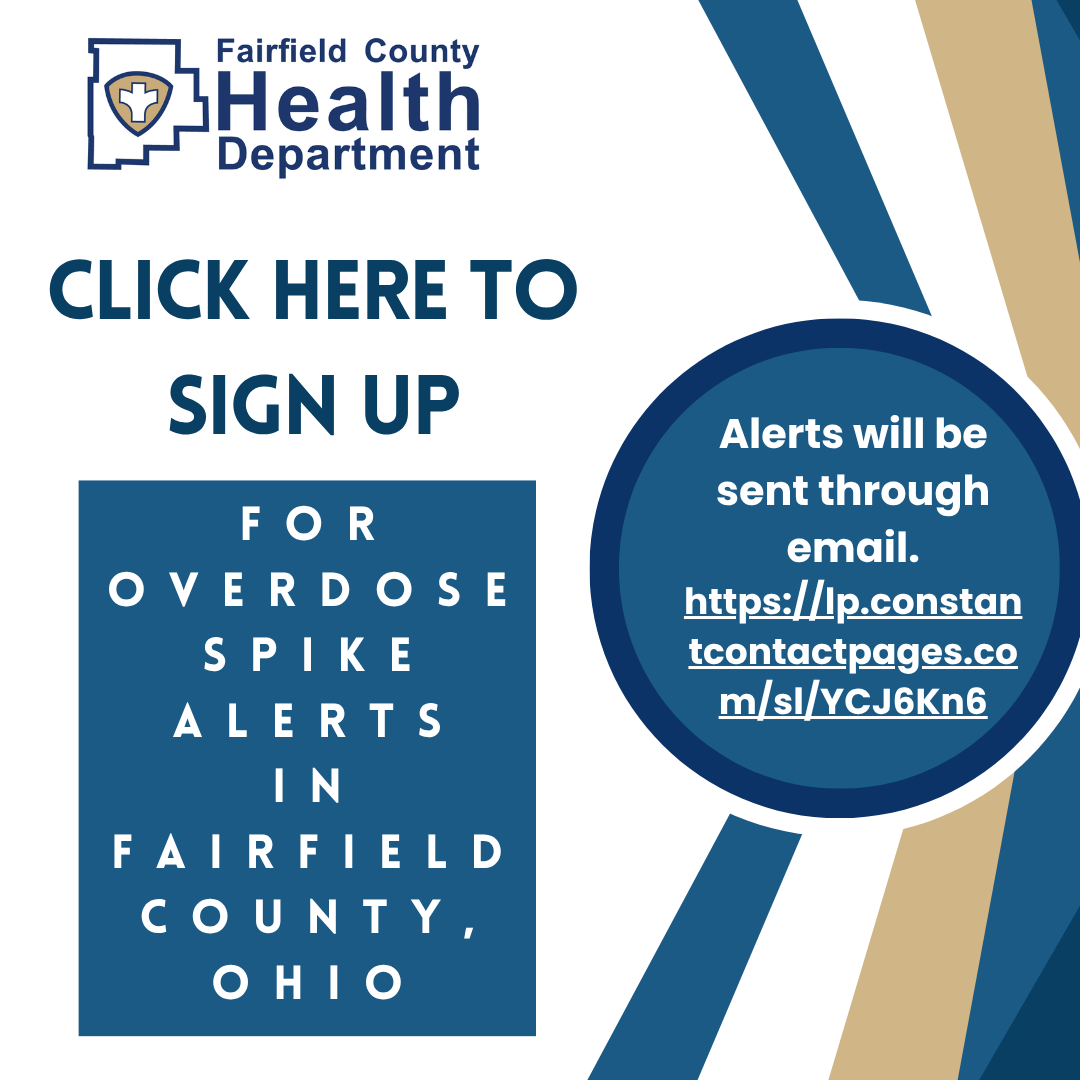
Fairfield County Health Department provides integrated harm reduction services to prevent overdose deaths and connect people to care. Explore the programs below.
Project DAWN (Deaths Avoided With Naloxone)
FCHD is part of the Project DAWN opioid overdose education and naloxone distribution network coordinated by the Ohio Department of Health.
Naloxone (commonly known as NARCAN®) is a medication that reverses an overdose caused by opioids, heroin, illicit fentanyl or prescription pain medications, by blocking their effects on the brain and quickly restoring breathing. It has been used safely by emergency professionals for more than 40 years, is a safe, non-controlled drug and has no potential for abuse. Given to someone not experiencing an opioid overdose, it is harmless.
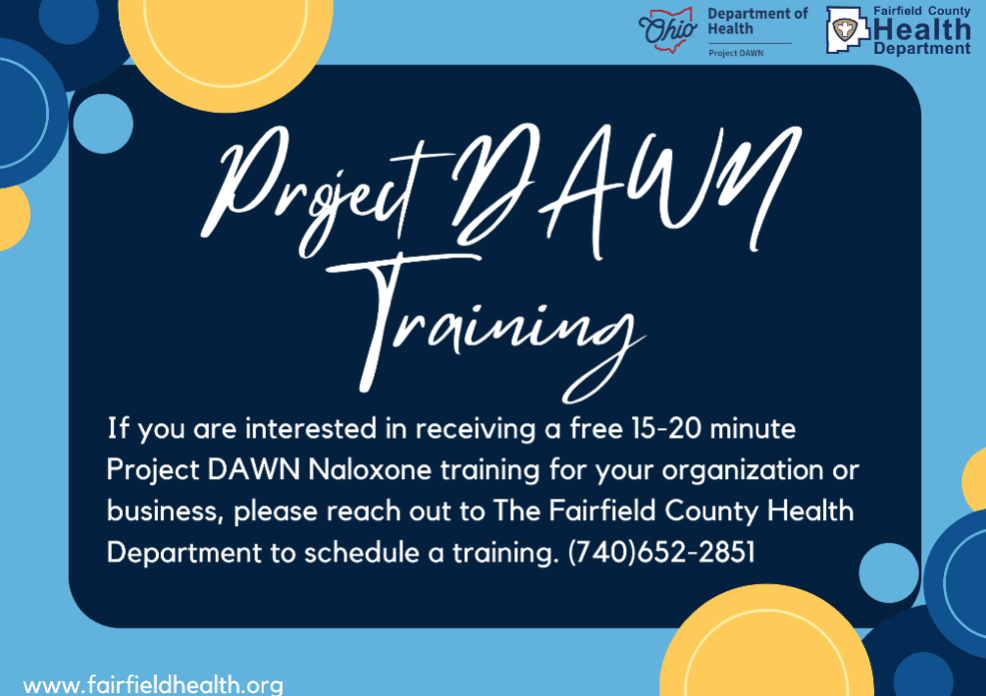
Naloxone can be administered by trained laypersons, helpful when a friend, family member or bystander witnesses an overdose. FCHD distributes naloxone and provides overdose prevention education and training to individuals and organizations throughout Fairfield County. To receive Project DAWN naloxone kits or schedule a free training, contact Megan Baker, BS, OCPSA.
Prevention & treatment services
FCHD's community health worker can help residents find community resources, contact Landon Spangler. Drug and alcohol treatment services in Fairfield County include:
- The STARLight Center, OhioGuidestone (opens in a new window, leaves this site), (740) 672-3855
- BrightView Health (opens in a new window, leaves this site), (866) 934-7450
- Chillicothe VA Med Center, Lancaster (opens in a new window, leaves this site), (740) 653-6145
- Complete Healthcare Addiction & Gynecology (opens in a new window, leaves this site), (614) 882-4343
- The Recovery Center (opens in a new window, leaves this site), (740) 687-4500
- The Creed of Recovery (opens in a new window, leaves this site), (614) 404-6008
- Mid Ohio Psychological Services (opens in a new window, leaves this site), (740) 687-0042
- Spero Health (opens in a new window, leaves this site), (740) 212-8137
- Sunrise Recovery (opens in a new window, leaves this site), (740) 901-9330
Stigma education
Stigma is any negative attitude, prejudice or false belief associated with specific traits, circumstances or health symptoms. People living with substance use or mental health disorders face stigma that can lead to discrimination and prevent them from seeking help.
There are three common types: structural (societal and institutional), public (attitudes of the general public) and self (internalized guilt or shame). Addressing stigma involves educating yourself and others, challenging stereotypes and using person-first language. Learn more about OH Against OD (opens in a new window, leaves this site) and the stigma of substance use disorders (opens in a new window, leaves this site).
Other resources & harm reduction efforts
In addition to naloxone, FCHD distributes fentanyl test strips and xylazine test strips to detect these substances. Illicit fentanyl is often mixed into other drugs and contributes to nearly 70% of overdose deaths; xylazine ("tranq") is a non-opioid veterinary tranquilizer increasingly found in the illicit supply.
FCHD distributes free Deterra drug disposal pouches (opens in a new window, leaves this site) to safely destroy unused or expired medications at home. To increase access to supplies like naloxone, first-aid kits and hygiene kits, FCHD has placed harm reduction cabinets throughout the county and, with the Prevention Advocacy & Treatment coalition and Project FORT, over 80 public emergency-access naloxone boxes.
If you or someone you know is struggling, help is available. For 24/7 free, confidential mental health or addiction crisis support, call or text 988 (opens in a new window, leaves this site).
The HERO Hub
The Harm reduction, Education, Resources and Overdose data hub (HERO Hub) brings Fairfield County overdose data, naloxone locations and harm reduction resources together in one place.
Partnerships
FCHD works closely with the Fairfield County ADAMH Board (opens in a new window, leaves this site), Project FORT (opens in a new window, leaves this site), local recovery support services and local fire departments and first responders. FCHD serves on Fairfield County ADAMH's Prevention, Advocacy, Recovery and Treatment (PART) Coalition and distributes resources such as naloxone to partners across the county.